Booking choice: The Reykjavik Food Walk, from $146 per person. Check dates Tour details
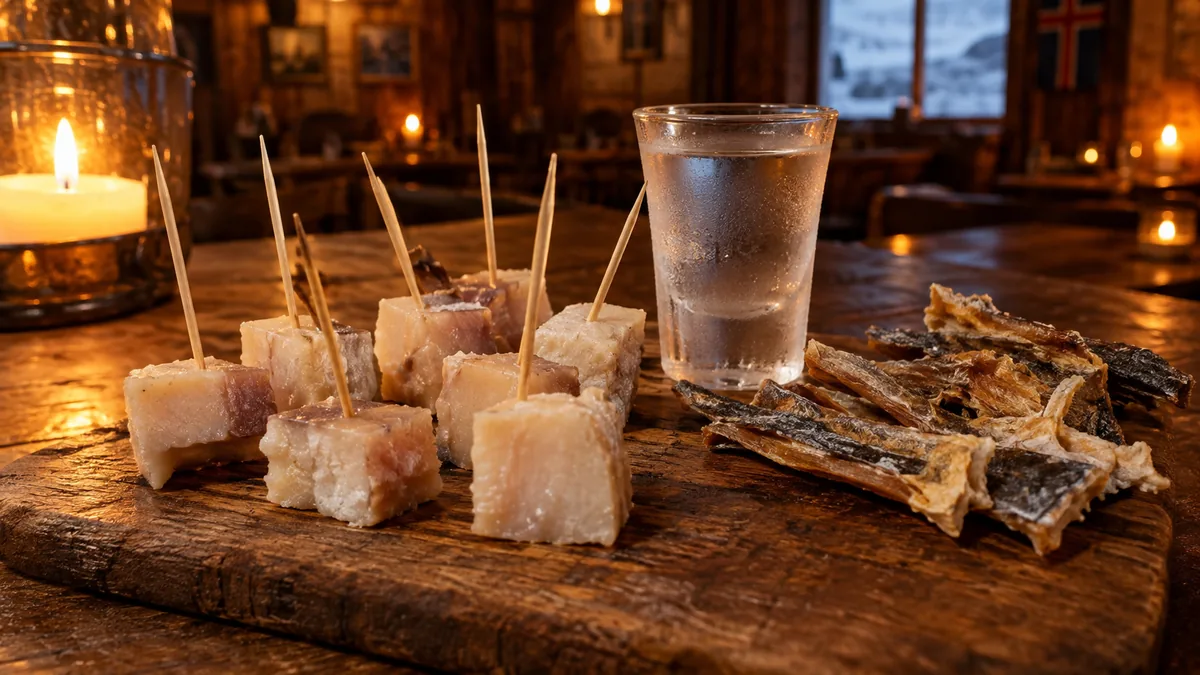
Fermented shark has become Iceland's food dare: travel shows film people gagging on it, and food tour guests often mention it in their reviews. The reality is gentler. You get a cube or two on a toothpick, and the smell does most of the work.
Below: what it is, how it is made, how it tastes, and which Reykjavik food tours put it on the plate.
The quick answer
Hakarl is Greenland shark, fermented for weeks and then hung to dry for months. It smells strongly of ammonia and tastes milder than it smells. Try one small cube, traditionally with a shot of Brennivin. The traditional tasting, private and food and beer history tours list it, and the Reykjavik Food Walk's operator page names it.
What is hakarl?
Hakarl is fermented and dried Greenland shark, cut into small cubes and eaten as a traditional Icelandic delicacy.
The fresh meat of the Greenland shark is poisonous because of its high urea and trimethylamine oxide content. Fermenting and drying it is what makes it safe to eat, according to Wikipedia.
How is fermented shark made?
The shark is cured for about six to twelve weeks, traditionally buried in gravel, and then cut into strips and hung to dry for several months.
During the drying a brown crust develops, which is removed before the meat is cut into small pieces and served (Wikipedia).
What does hakarl taste like?
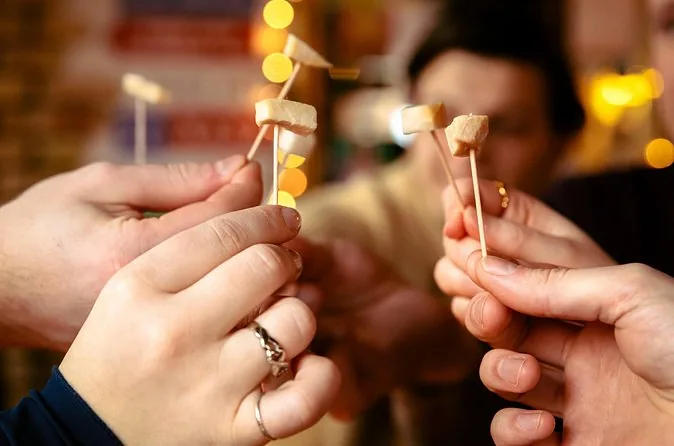
Strong ammonia on the nose, then a fishy, chewy taste that is milder than the smell suggests.
First-timers often gag on the smell rather than the flavour. Guests react the way you would expect: "the food was not all delicious, especially the fermented shark", wrote one on the food and drink walk, while a Food Walk guest called it "a must try" and another said it was not as bad as expected.
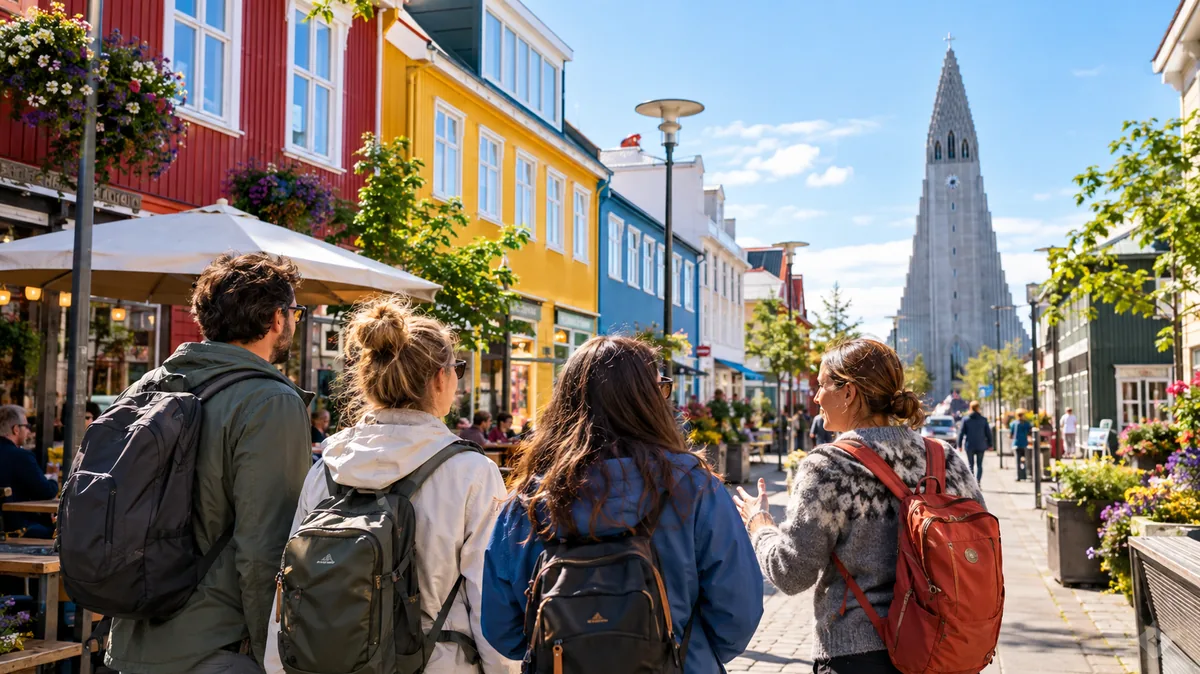
Curious but cautious? On the Food Walk the shark is one small taste among eight or more dishes.
Check dates for the Reykjavik Food WalkWhy do you drink Brennivin with it?
Brennivin, a caraway-flavoured Icelandic schnapps, is the traditional companion, often taken as a shot with the first cube.
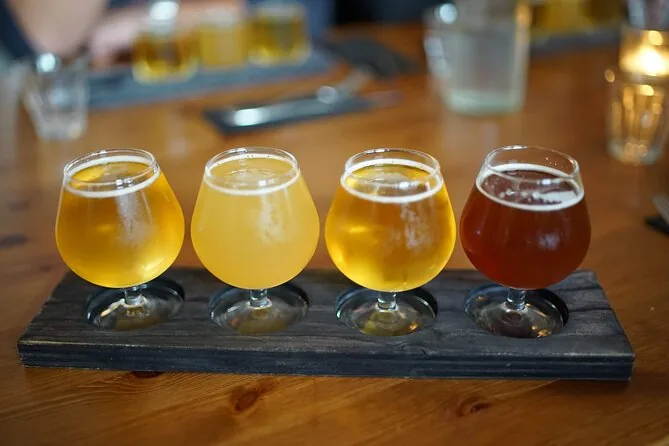
Not every tour pours a shot. If the ritual matters to you, pick a tour with alcohol in the price: the traditional tasting tour and the food and beer history walk both include it.
When do Icelanders eat hakarl?
Most often at Thorrablot, the midwinter feast held in the old month of Thorri (mid-January to mid-February), as part of a platter of traditional food.
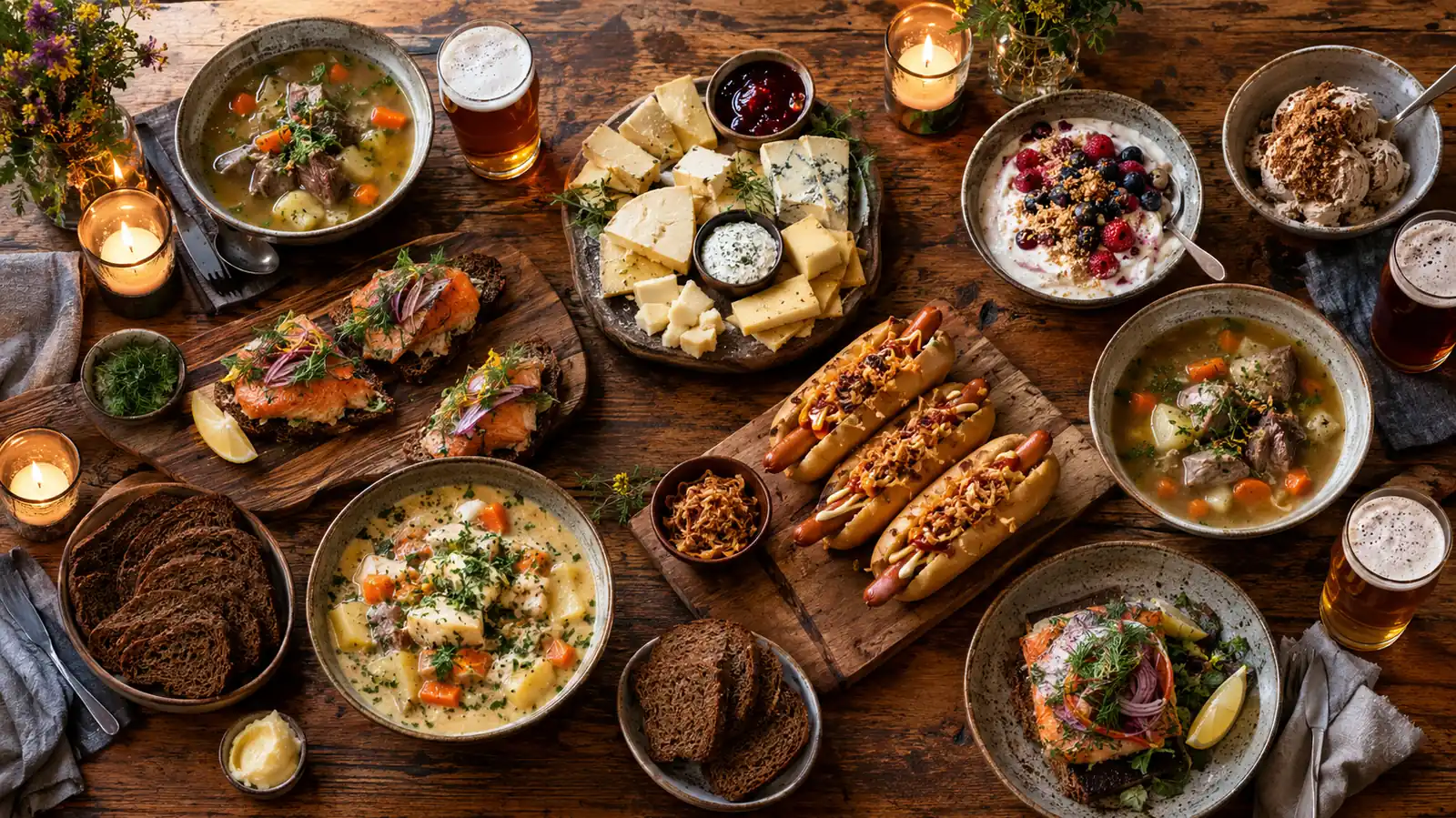
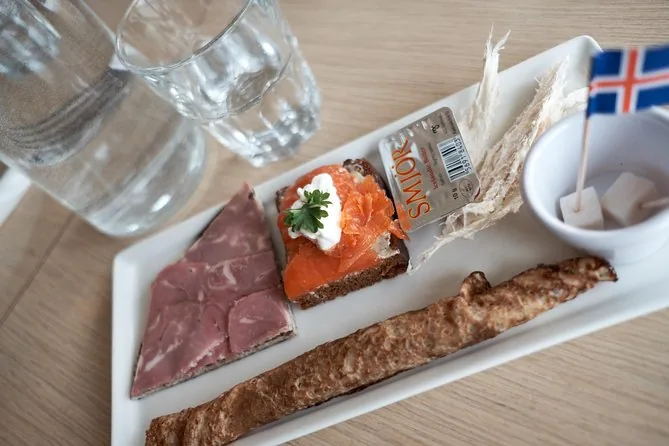
Fermented shark is sold in Icelandic shops all year, but it is most often served as part of the thorramatur platter, with rye bread, butter and Brennivin, at the feast. Treat it as a festive dish when a menu presents it as everyday food.

Which Reykjavik food tours serve fermented shark?
The traditional tasting tour, the private food tour and the food and beer history walk list it, and the Reykjavik Food Walk's operator page names it; guests on the food and drink walk and the street food walk report trying it too.
| Tour | Fermented shark | Source |
|---|---|---|
| Traditional food tasting | Yes | Listing: "lamb soup to fermented shark" |
| Private food tour | Yes | Listing mentions fermented shark |
| Food and beer history walk | Yes | Listing: "from fermented shark to lamb soup" |
| Reykjavik Food Walk | Yes | Operator page names it; guests report trying it |
| Food and drink walk | Often | Guests report trying it |
| Street food walk | Sometimes | A guest reports trying it |
| Hot chocolate food walk | Not listed | Dried fish is listed instead |
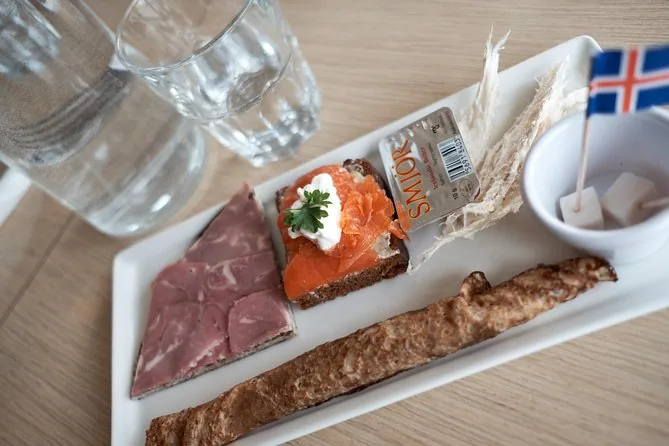
A traditional menu, from lamb soup to fermented shark, with drinks included.
Explore the traditional food tasting tour Tour detailsDo you have to eat it on a food tour?
It is offered as a small taste, so tell your guide if you would rather pass.
Guides offer it as a small taste, and guests note that the guide often gets the whole group to try. If you are pregnant or avoiding raw or fermented fish, mention it when you book; see food tours and dietary needs.
One cube, one story to tell: check dates for the Reykjavik Food Walk.
Check dates for the Reykjavik Food WalkIs it worth trying?
Once, yes: it is a real piece of Icelandic history, and a single cube on a food tour is the easiest low-stakes way to try it.
Buying a whole tub is a different matter. Try it alongside dishes you will actually enjoy, like lamb, Arctic char and rye bread ice cream; our Icelandic food guide covers the rest of the menu.
Frequently asked questions
Is fermented shark safe to eat?
Yes, when properly processed. Fresh Greenland shark is toxic, and the fermentation and months of drying are what make it safe.
Why does hakarl smell like ammonia?
Greenland shark meat is rich in urea and trimethylamine oxide, which break down during curing and release a strong ammonia smell.
What do you drink with fermented shark?
Traditionally a shot of Brennivin, a caraway-flavoured Icelandic schnapps.
Do Icelanders actually eat hakarl?
Yes. It is sold in shops all year, but it is most often served at the midwinter Thorrablot feast.
Ready to book
Choose your tour
Free cancellation up to 24 hours before on every option. Prices are from-prices in USD and move with the season.

The Reykjavik Food Walk: Lunch or Dinner
- 3-hour walking tour with a local foodie guide
- 4 to 6 local eateries, from food trucks to sit-down restaurants
- 8+ tastings, such as Arctic char, Icelandic lamb, cheeses and rye bread ice cream
Traditional Icelandic Food Tasting Tour
- Guided walk with about six food stops in the old town
- Tastings from lamb soup and fish to fermented shark
- Water and alcoholic drinks, as listed
Funky Food & Beer History Walk
An evening of history, five food stops and craft beer